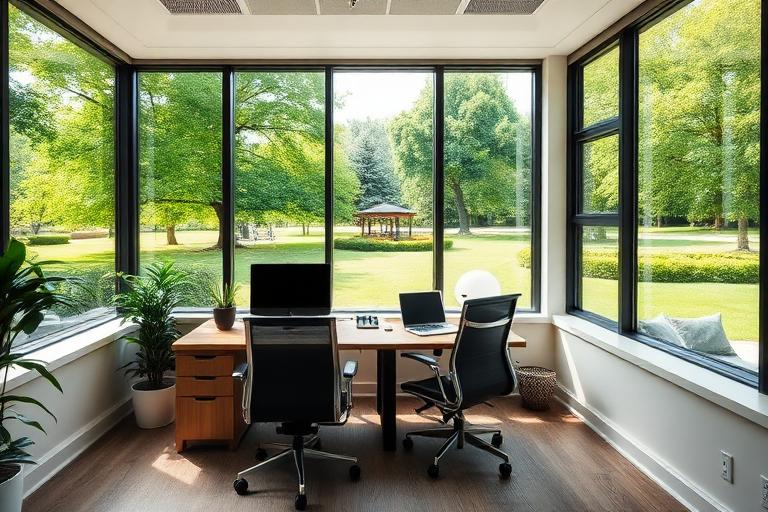
Productivity is not a mystery. It rises when workers reduce distractions, increase information flow, and access better tools. Home offices often fail on all three dimensions. The modern household is full of interruptions, and the boundary between work and leisure is porous. The result is lower output, even for highly skilled workers.
Shared workspaces solve this problem by creating environments optimized for concentration. The economics are straightforward: when individuals invest in a collective infrastructure (quiet rooms, reliable internet, meeting spaces), they each gain more than they could produce alone. This is the same logic that explains why firms exist. Coordination reduces cost.
Aspire Ann Arbor amplifies these benefits by curating a culture of focus. The space is intentionally quiet, not because silence is fashionable, but because attention is scarce. In knowledge work, attention is capital. Workers who protect it produce more, learn faster, and innovate more often.
The lesson is simple: productivity is not just about talent. It is about environment. And environments designed for focus outperform those that are improvised.