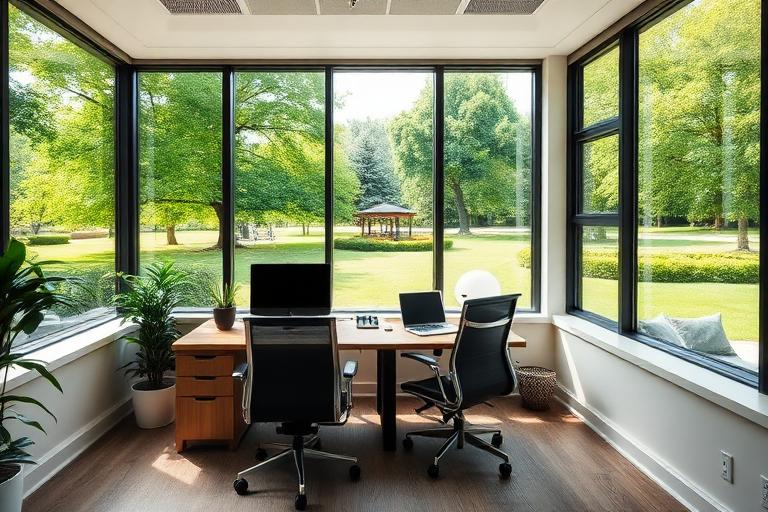
Cognition is shaped by environment. The brain is not a free-floating processor; it is a context-dependent machine whose performance rises or falls with the cues around it. Working from home often deprives people of the environmental signals that support sustained attention. The result is cognitive drift: shorter focus intervals, more task-switching, and slower problem-solving.
Coworking spaces counteract this by creating what psychologists call high-signal environments: places where the architecture, lighting, noise levels, and social norms all point toward concentration. Humans unconsciously mirror the behavior of those around them. When others are working, we work. When the environment is orderly, our thinking becomes more structured.
The cognitive benefits extend beyond focus. Changing physical context improves memory consolidation and creativity. Novelty stimulates the brain’s attentional networks, which is why a new workspace often produces a burst of clarity. Coworking spaces provide this novelty without the chaos of a coffee shop.
The lesson is simple: cognition is not just a personal trait; it is an environmental outcome. Coworking spaces are engineered to produce better thinking, and in a knowledge economy, better thinking is the ultimate competitive advantage.